Conrad Ziller

Political Science · University of Duisburg-Essen

Conrad Ziller

Professor in the Department of Political Science – Working Group Empirical Political Science. I study how immigration shapes politics and society, the political psychology behind attitudes, extremism and the vote, and how public policy feeds back into what citizens think and do.

Portrait of Conrad Ziller

I led research projects funded by the German Research Foundation and the Fritz Thyssen Foundation. My work has appeared in the American Political Science Review, the Journal of Politics, British Journal of Political Science, and Social Forces, among others.

Before Duisburg-Essen I was a postdoctoral researcher and Visiting Associate Professor at the Institute of Sociology and Social Psychology, University of Cologne, and a visiting researcher in Vancouver, Odense, and Oxford.

ServiceEditorial Board, Journal of Ethnic and Migration Studies · Co-spokesperson, DVPW working group Wahlen und politische Einstellungen · formerly Associate Editor, European Societies
FundingGerman Research Foundation (DFG) · Fritz Thyssen Foundation
VisitingUniversity of British Columbia (2021) · University of Southern Denmark (2018) · University of Oxford (2016)
EducationHabilitation (Venia legendi in Political Science), University of Cologne (2020) ·
Dr. rer. pol., University of Cologne (2015)

Research

Five threads

Separate literatures, one question: when do political and social contexts pull people together, and when do they push them apart?

Immigration & politicsHow immigration and ethnic diversity reshape political trust, party support, and attitudes toward minorities.
Political psychology & behaviourPolitical attitudes, tolerance and its limits, extremism, and electoral behaviour — studied with survey experiments, panel data, and vignette designs.
Immigrant integrationNeighbourhood cohesion, social openness, and the local conditions under which integration succeeds or stalls.
Policy effects on citizensHow antidiscrimination law, the quality of local government, and surveillance policy feed back into political support.
Quantitative methodsMultilevel and panel designs, survey experiments, and many-analysts work on the robustness of social science.

Publications

Peer-reviewed and beyond

Preprints and replication files are linked wherever they exist.

Journal articles · peer-reviewed

in press

Von der ökonomischen Teilhabefrage zur Identitätsfrage: Die Transformation der Wiedervereinigungskritik in Ostdeutschland
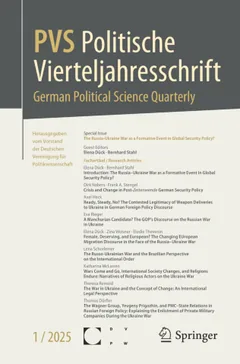
Schulz, N., Ziller, C.

Politische Vierteljahresschrift

2026

Investigating the analytical robustness of the social and behavioural sciences

Aczel, B., Szaszi, B., Clelland, H. T., […] Ziller, C., […]

Nature652(8108), 135–142

Dimensions of heuristic use in mathematical problem solving: Evidence from early secondary school students

Herold-Blasius, R., Kleinschmidt, H., Ziller, C.

J. für Mathematik-Didaktik47(1), 6 (1–40)

Between Socioeconomic Decline and Lack of Political Competition: What Explains the Success of the AfD in North Rhine-Westphalia’s 2025 Integration Council Elections?

Kuhlmann, J., Ziller, C.

Politische Vierteljahresschrift

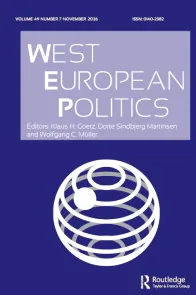
Political Support in Times of Progressive Policy Change and Radical-Right Populist Party Success

Vierus, P., Ziller, C.

West European Politics49(4), 1042–1069

2025

Beyond Religious Categories: Understanding Differences between Muslims and Non-Muslims in Accepting Parenting Styles Involving Physical Discipline

Ziller, C., Hummler, T.

Social Science Research131, 103221

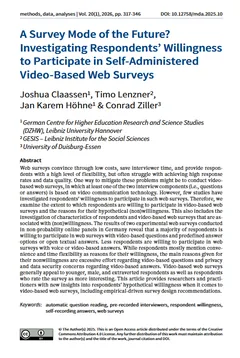
A survey mode of the future? Investigating respondents’ willingness to participate in self-administered video-based web surveys

Claassen, J., Lenzner, T., Höhne, J. K., Ziller, C.

methods, data, analyses

Willingness to Share Personal Data Online: The Role of Social Influence and Sustainability

Ziller, C., Loepp, B., Kindermann, B., Köchling, G., Fadeeva, Y.

Technology in Society83, 102974

Following Political Science Students Through Their Methods Training: Statistics Anxiety, Student Satisfaction, and Final Grades in the COVID Year 2021/22

Vierus, P., Elis, J., Goerres, A., Ziller, C., Höhne, J. K.

Politische Vierteljahresschrift66, 867–884

The reliability of replications: A study in computational reproductions

Breznau, N., Rinke, E. M., Wuttke, A. et al. […] Ziller, C. […]

Royal Society Open Science12(3), 241038

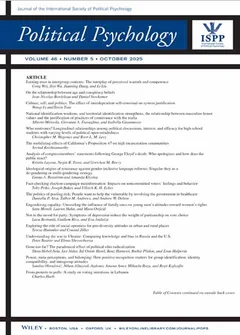
Exploring the Role of Social Openness for Pro-Diversity Attitudes in Urban and Rural Places

Hummler, T., Ziller, C.

Political Psychology46(5), 1151–1167

2024

Investigating Respondents’ Willingness to Participate in Video-based Web Surveys

Höhne, J. K., Ziller, C., Lenzner, T.

Int. J. of Market Research66(1), 3–13

Modeling Spatial Heterogeneity and Historical Persistence: Nazi Concentration Camps and Contemporary Intolerance

Pepinsky, T., Goodman, S. W., Ziller, C.

American Political Science Review118(1), 519–528

2023

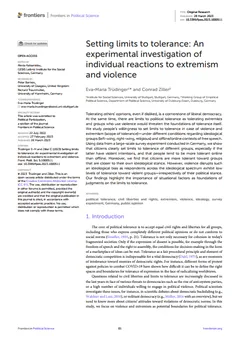
Setting Limits to Tolerance: An Experimental Investigation of Individual Reactions to Extremism and Violence

Trüdinger, E.-M., Ziller, C.

Frontiers in Political Science

Local ties that bind: The role of perceived neighborhood cohesion and disorder for immigrants’ national identification

Ziller, C., Schlösser, T., Schück, K., Partos, K.

Social Science Research112, 102803

2022

Grenzen politischer Repräsentation: Determinanten der Wahlbeteiligung bei Integrationsratswahlen in Nordrhein-Westfalen

Vierus, P., Ziller, C., Marx, N.

Kölner Z. für Soziologie u. Sozialpsychologie74(4), 525–551

Observing many researchers using the same data and hypothesis reveals a hidden universe of uncertainty

Breznau, N., Rinke, E. M., Wuttke, A. et al. […] Ziller, C. […]

PNAS119(44), e2203150119

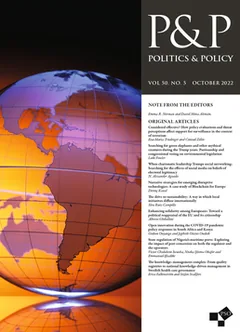
Considered Effective? How Policy Evaluations and Threat Perceptions Affect Support for Surveillance in the Context of Terrorism

Trüdinger, E.-M., Ziller, C.

Politics & Policy50(5), 894–912

Quality of Local Government and Social Trust in European Cities

Ziller, C., Andreß, H.-J.

Urban Studies59(9), 1909–1925

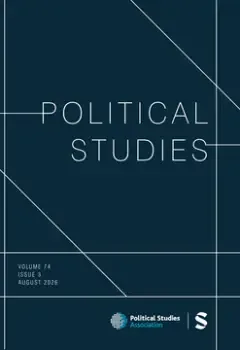
Established and Excluded? Immigrants’ Economic Progress, Attitudes toward Immigrants, and the Conditioning Role of Egalitarianism and Intergroup Contact

Ziller, C.

Political Studies70(1), 236–256

2021

Personality Traits and Public Support of Minority Rights

Ziller, C., Berning, C. C.

J. of Ethnic and Migration Studies47(3), 723–740

2020

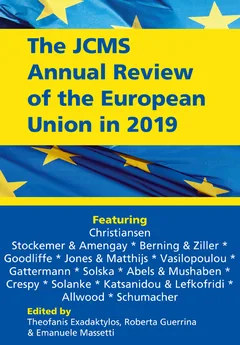
Green Versus Radical Right as the New Political Divide? The European Parliament Election 2019 in Germany

Berning, C. C., Ziller, C.

J. of Common Market Studies58(S1), 43–56

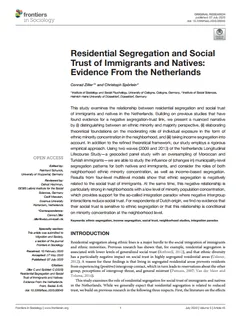
Residential Segregation and Social Trust of Immigrants and Natives: Evidence from the Netherlands

Ziller, C., Spörlein, C.

Frontiers in Sociology5:45, 1–13

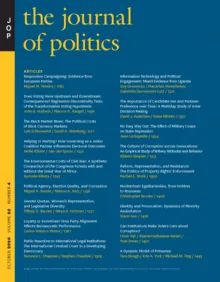
Local Government Efficiency and Anti-Immigrant Violence

Ziller, C., Goodman, S. W.

The Journal of Politics82(3), 895–907

Economic Conditions and Native-Immigrant Asymmetries in Generalized Social Trust

Ziller, C., Heizmann, B.

Social Science Research87, 102399

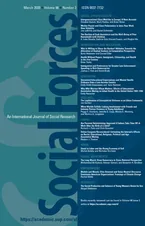
Who Is Willing to Share the Burden? Attitudes Towards the Allocation of Asylum Seekers in Comparative Perspective

Heizmann, B., Ziller, C.

Social Forces98(3), 1026–1051

2019

Policy Effects on Political Engagement

Ziller, C.

Kölner Z. für Soziologie u. Sozialpsychologie71(Suppl 1), 285–312

Antidiscrimination Laws, Policy Knowledge and Political Support

Ziller, C., Helbling, M.

British J. of Political Science49(3), 1027–1044

Immigration, Social Trust, and the Moderating Role of Value Contexts

Ziller, C., Wright, M., Hewstone, M.

Social Science Research79, 115–126

2017

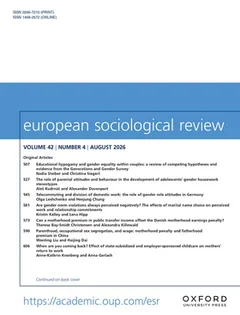
Equal Treatment Regulations and Ethnic Minority Social Trust

Ziller, C.

European Sociological Review33(4), 563–575

Social Trust and Radical Right-Wing Populist Party Preferences

Berning, C. C., Ziller, C.

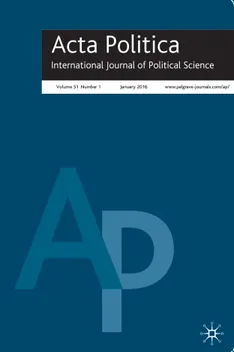
Acta Politica52(2), 198–217

2015

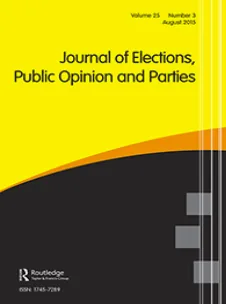
“The Pure People” versus “the Corrupt Elite”? Political Corruption, Political Trust and the Success of Radical Right Parties in Europe

Ziller, C., Schübel, T.

J. of Elections, Public Opinion & Parties25(3), 368–386

Ethnic Diversity, Economic and Cultural Contexts, and Social Trust: Cross-Sectional and Longitudinal Evidence from European Regions, 2002–2010

Ziller, C.

Social Forces93(3), 1211–1240

Young Scholar Award 2016, Arbeitsgemeinschaft Sozialwissenschaftlicher Institute (ASI)

2014

Societal Implications of Antidiscrimination Policy in Europe

Ziller, C.

Research & Politics1(3), 1–9

Book

2024

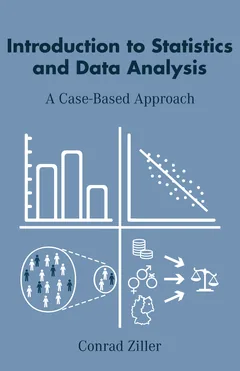
Introduction to Statistics and Data Analysis — A Case-Based Approach

Ziller, C.

Open access

Handbooks and edited volumes

2025

Nachbarschaft als politischer Raum: Eine Untersuchung Duisburger Stadtteile

Ziller, C.

TranscriptIn: Baykara-Krumme, H. et al. (Hrsg.), Duisburg – Transitionen (in) einer Stadt, 423–426

2023

Migrations- und Integrationspolitik

Ziller, C., Goerres, A.

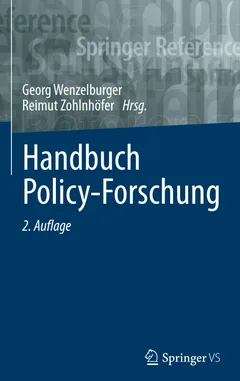
SpringerIn: Wenzelburger/Zohlnhöfer (Hrsg.), Handbuch Policy-Forschung, 2. Aufl., 683–707

2022

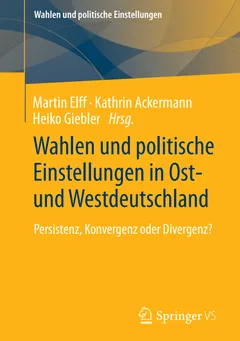
Verbreitung und Entwicklung rechtsextremer Einstellungen in Ost- und Westdeutschland

Berning, C. C., Ziller, C.

Springer VSIn: Ackermann, K. et al. (Hrsg.), Wahlen und politische Einstellungen in Ost- und Westdeutschland, 307–338

Personal and Contextual Foundations of Welfare Chauvinism in Western Europe

Ziller, C., Careja, R.

Edward ElgarIn: Crepaz, M. (Hrsg.), Handbook on Migration and Welfare, 175–193

2020

Multiple Regressionen mit voneinander abhängigen Beobachtungen: Random-Effects und Fixed-Effects

Ziller, C.

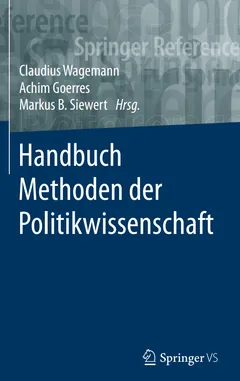
SpringerIn: Wagemann/Goerres/Siewert (Hrsg.), Handbuch Methoden der Politikwissenschaft, 467–493

Other publications

2026

Von der Statistikangst zur Selbstwirksamkeit: Erfahrungen aus einem Jahr DataVibes

Ziller, C., Alali, A.

Blog

Paradoxe Erfolge: Warum die AfD bei den Integrationsratswahlen 2025 punkten konnte

Kuhlmann, J., Ziller, C.

Blog

2025

Aktivierte Vorbehalte: Wie Migration zum Schlüsselthema der Bundestagswahl 2025 wurde

Ziller, C.

Blog

2024

Integration und Zusammenhalt in Nachbarschaften deutscher Großstädte: Ergebnisse der ersten Befragungswelle der Umfrage „Leben im Viertel“ (LiV)

Ziller, C., Hummler, T.

Report

Causation and History in Legacy Studies: A Reply to Homola, Pereira, and Tavits

Pepinsky, T., Goodman, S. W., Ziller, C.

Reply

2023

Fremdenhass durch Wohnortnähe zu ehemaligen Konzentrationslagern? Drei Lehren über aktuelle Entwicklungen in der Politikwissenschaft

Ziller, C.

Blog

Editorial: Contemporary threats, surveillance, and the balancing of security and liberty

Trüdinger, E.-M., Ziller, C., Van der Noll, J.

Frontiers in Political Science

2020

Essays on Policy Effects on Political Engagement and Intergroup Relations

Ziller, C.

HabilitationKumulative Habilitationsschrift, Universität zu Köln

2019

The Crowdsourced Replication Initiative: Investigating Immigration and Social Policy Preferences using Meta-Science

Breznau, N., […] Ziller, C. […] (one of 165 collaborators)

Executive report

2015

Voter experience of corrupt officials is an overlooked reason for the electoral success of radical right parties

Ziller, C., Schübel, T.

LSE EUROPP

Social Trust in the Face of Ethnic Diversity: The Moderating Role of Economic, Cultural, and Political Contexts

Ziller, C.

DissertationUniversität zu Köln

German Thesis Award (Deutscher Studienpreis, 2. Preis), Körber-Stiftung 2016 · Honorable mention DVPW-Förderpreis 2016

Projects

Research grants

Democracy in Crisis: The Role of Emotions and Affective Polarization for Citizens’ Political Support During Threatening Events

Fritz Thyssen Foundation04/2022 – 05/2025

Social openness, social control, and the integration of Muslim immigrants — a panel study in neighbourhoods of selected German cities

German Research Foundation (DFG)04/2021 – 12/2024

Interethnic trust asymmetries and immigrant integration

German Research Foundation (DFG)04/2019 – 03/2022

Teaching & outreach

Statistics without the fear

Most students meet quantitative methods as an obstacle. Both projects below try to change that — one as a textbook, one as short video.
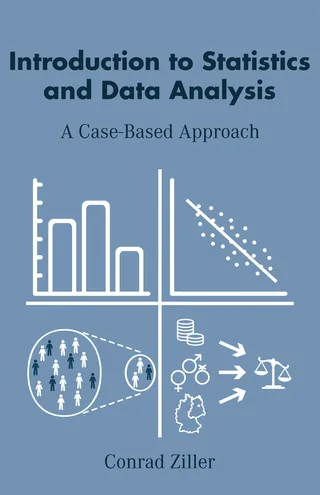
Introduction to Statistics and Data Analysis — A Case-Based Approach

A free, case-based introduction that works through real research questions instead of abstract formulas. Available online and as a PDF.

DataVibes — short-form videos on statistics and data analysis on Instagram and TikTok.

Courses taught

Duisburg-EssenStatistics · Introduction to Empirical Social Research · Local Politics · Inequality and Democracy · Right-Wing Populism · Advanced Regression Modeling · Racism and Discrimination

Media presence

Selected coverage

Commentary and interviews on elections, the radical right, migration and local politics — in German, English, Spanish, Italian and Portuguese outlets.

All recent 26 media appearances
WELT am SonntagDer Kampf um die Macht in Köln 08/2025
Radio EssenBundestagswahl in Essen 02/2025

Curriculum vitae

Full CV

Curriculum vitae

Appointments, education, awards, third-party funding, professional service, and the list of publications.

Contact

Get in touch

Working Group of Empirical Political Science, Department of Political Science, University of Duisburg-Essen, Forsthausweg 2, 47057 Duisburg, Germany.

Impressum

Impressum und Datenschutz

Angaben nach § 5 DDG und Art. 13 DSGVO. Diese Seite ist eine private Website und kein Angebot der Universität Duisburg-Essen.
AnbieterProf. Dr. Conrad Ziller
Institut für Politikwissenschaft, Universität Duisburg-Essen
Forsthausweg 2, 47057 Duisburg
VerantwortlichProf. Dr. Conrad Ziller, Anschrift wie oben (§ 18 Abs. 2 MStV)
Externe LinksFür die Inhalte verlinkter Seiten ist stets deren Anbieter verantwortlich.
DatenverarbeitungDiese Website ist statisch: keine Cookies, kein Tracking, keine Formulare, keine Nutzungsprofile.
HostingAusgeliefert von Netlify, Inc., 512 2nd Street, San Francisco, CA 94107, USA. Dabei werden technisch notwendige Zugriffsdaten verarbeitet (IP-Adresse, Zeitpunkt, aufgerufene Datei, Browsertyp). Rechtsgrundlage ist Art. 6 Abs. 1 lit. f DSGVO; Grundlage der Übermittlung in die USA sind die EU-Standardvertragsklauseln.
ReichweitenmessungDiese Website nutzt Cloudflare Web Analytics (Cloudflare, Inc., 101 Townsend Street, San Francisco, CA 94107, USA) zur anonymen Zugriffsmessung. Es werden keine Cookies gesetzt und keine Nutzungsprofile erstellt; die Auswertung erfolgt ausschließlich aggregiert. Rechtsgrundlage ist Art. 6 Abs. 1 lit. f DSGVO.
SchriftenDie Schriften werden von dieser Website selbst ausgeliefert; es besteht keine Verbindung zu Servern Dritter.
Ihre RechteAuskunft, Berichtigung, Löschung, Einschränkung und Widerspruch nach Art. 15 bis 21 DSGVO. Beschwerderecht bei der Landesbeauftragten für Datenschutz und Informationsfreiheit Nordrhein-Westfalen.